Fact Check Fashion
Have you ever wondered how it is possible for a new t-shirt to be cheaper than a Big Mac-meal?
Fast fashion companies produce and sell garments at a historical speed while hiding the real cost for the people and the planet. They talk about being green and responsible, but can we really know whether that is true?
Here you can find materials and exercises to gain more knowledge on fast fashion, greenwashing and tools to make an impact! You don’t have to be an expert on these issues – a curious mind is all you need!

How does this work?
All you need is on this page.
Part 1 & 2 is about fast fashion and greenwashing. Explore the material and try the exercises. Each part takes about 30 minutes to complete.
Part 3 is all about different ways that you can influence. Find new ways in which you can influence the future for fast fashion and greenwashing.
All activities can be done individually, with a friend or a small group!
PS: Throughout this toolkit you may be asked to share your thoughts and reflections – these responses are all anonymous but please do not share personal information, such as your name, there. Your response may be published in this toolkit so that others can be inspired by your thoughts!
Part 1: Fast fashion and overconsumption
Many express themselves through fashion and clothes, which isn’t surprising – clothes are fun! But they are produced and consumed in volumes that are not sustainable for the planet and its people. That is why it is important to identify the needs behind purchasing new clothes.
Do you buy new jeans because your old ones are worn-out or because you saw a nice pair on TikTok that you just need to have? Are there alternative ways to fulfill the need of (new) clothing?
Shopping for clothes – need or want?
Discuss the following questions with a friend or write down your reflections:
-
Think about the last three pieces of clothing you’ve recently added to your wardrobe. What was important to you when buying them? What did you consider when choosing them?
-
Why do we love fashion and clothes? Why does it make us feel so good?
-
What needs are fulfilled by buying clothes? You can use the list of common human needs from the link below.
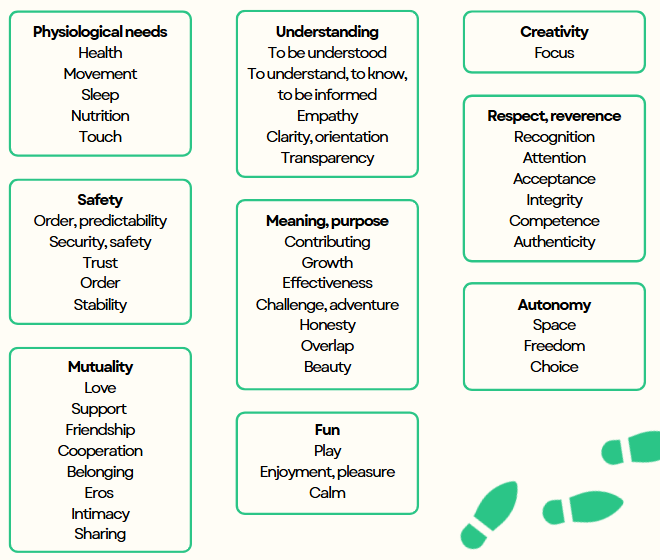
Nonviolent communication (initiated by the psychologist Marshall Rosenberg) differentiates between needs and strategies:
Needs are the basic driving force in a person. Everything people do is driven by a conscious or unconscious effort to fulfill universal human needs that are essential for a healthy, fulfilling and meaningful life. All people share the same needs, but at different times they feel those same needs with varying intensities.
Some examples: safety, belonging, rest, connection, self-expression
Strategies are the specific ways of fulfilling needs. There are many strategies one can use for fulfilling a specific need and different people meet their needs with different strategies. Strategies translate into what we want and are often tied to a specific person, place, event, time or object.
Here’s an example of strategies versus needs:
There are many ways you can rest (which is the need here) during breaks at school. However, not all of them will suit everyone. Someone wants to read at break time, but their classmates will be throwing a ball over their head (also relaxing). Everyone rests in between classes, but the ways of relaxing may not always fit together.
All needs and feelings are valid, and it’s totally fine to want to express yourself through fashion. At the same time, we live in a world of overconsumption where enough clothes have already been made for everyone on Earth to wear right now. That’s why it’s important to identify when we make a shopping decision because we want something (such as buying a tenth T-shirt serving the same function), and to think about whether there are other ways to fulfill the underlying need.
Fashion industry, marketing & consumption
Watch this snippet from the video: How do we really stop fast fashion by Our Changing Climate. The full 12-minute video from Our Changing Climate can be found on YouTube.
A capitalist is someone who owns or invests in businesses to make a profit, often by owning factories, land, or companies.
Capitalism is a system where private individuals or companies own most things, like factories, shops, and land, and run them to make a profit. This often means cutting costs (like paying low wages) and encouraging people to keep buying more.
Video analysis
» What feelings did the video provoke? Discuss with someone or write down your thoughts.
You can use the feelings list below for help.
- Afraid
- Annoyed
- Stressed out
- Angry
- Lost
- Disconnected
- Helpless
- Upset
- Tired
- Lonely
- Sad
- Tense
- Nervous
- Vulnerable
- Impatient
- Frustrated
- Confused
- Discouraged
- Bored
- Hurt
- Disappointed
- Anxious
- Overwhelmed
- Engaged
- Quiet
- Touched
- Amazed
- Encouraged
- Calm
- Hopeful
- Open Relaxed
- Surprised
- Energized
- Relieved
- Balanced
- Loving
- Curious
- Confident
- Excited
- Grateful
- Inspired
- Joyful
- Glad
- Peaceful
- Passionate
🧡 Just a reminder:
It’s totally okay to feel whatever you’re feeling right now – angry, sad, hopeful, confused, or even numb. All emotions are valid. If you need a moment to take a break, breathe, or step outside, that’s completely okay too.
Actors in the global supply chain
» What actors of the global clothing supply chain can you identify in the video?
»How much power do the different actors have to change the fashion industry?
Rank the stakeholders from least powerful to most powerful.
The fashion industry is made up of lots of different people and companies – but the power isn’t shared equally. Most of the control sits with just a few big brands and their owners.
But here’s the thing: you also have power. As a consumer and as a citizen, you can influence how these companies behave – both directly and indirectly.
⇒ You can speak up by asking questions or calling out companies on social media.
⇒ You can push for change by voting or getting in touch with politicians who make the laws that companies have to follow. More on that later.
But before we can take action, we need to understand what companies are actually doing to make the world better – and what’s just greenwashing. That way, we’ll know where to put our energy and who really needs to be held accountable.
You’ve reached the end of of the chapter – way to go! Here are some questions to reflect on…
- Was anything surprising – and what will you do with what you’ve learnt?
- If you could change something about the fashion industry – what would it be?
- How can we satisfy needs without overconsumption?
Part 2: Greenwashing
You may have noticed that advertising is often full of of images, words and claims that refer to positive environmental impacts. But not everything is allowed in marketing. Sustainability claims must not mislead consumers. If you try to make a product or service look more responsible than it actually is, you are greenwashing.
As many as 42% of all examined green claims in advertisements are exaggerated, incorrect or misleading. So this is no small phenomenon!
But how can we identify which marketing claims are true and which are greenwashing?
Image analysis
Take a look at these advertisements, one by one, and discuss the following questions with a friend or write down your reflections.
- What do you see in the pictures? Are there any products in them? Would you buy them? If yes, why?
- What feelings do the images provoke? You can use the feelings list below for inspiration.
- Afraid
- Annoyed
- Stressed out
- Angry
- Lost
- Disconnected
- Helpless
- Upset
- Tired
- Lonely
- Sad
- Tense
- Nervous
- Vulnerable
- Impatient
- Frustrated
- Confused
- Discouraged
- Bored
- Hurt
- Disappointed
- Anxious
- Overwhelmed
- Engaged
- Quiet
- Touched
- Amazed
- Encouraged
- Calm
- Hopeful
- Open Relaxed
- Surprised
- Energized
- Relieved
- Balanced
- Loving
- Curious
- Confident
- Excited
- Grateful
- Inspired
- Joyful
- Glad
- Peaceful
- Passionate
Image 1

This image is very similar to the pictures in advertisements and sustainability reports of fashion companies. The companies often talk about their sustainability work, and in their communication it is common to show nice pictures of nature. But where and how are the products actually manufactured? Where do the materials come from?
(source)
Image 2
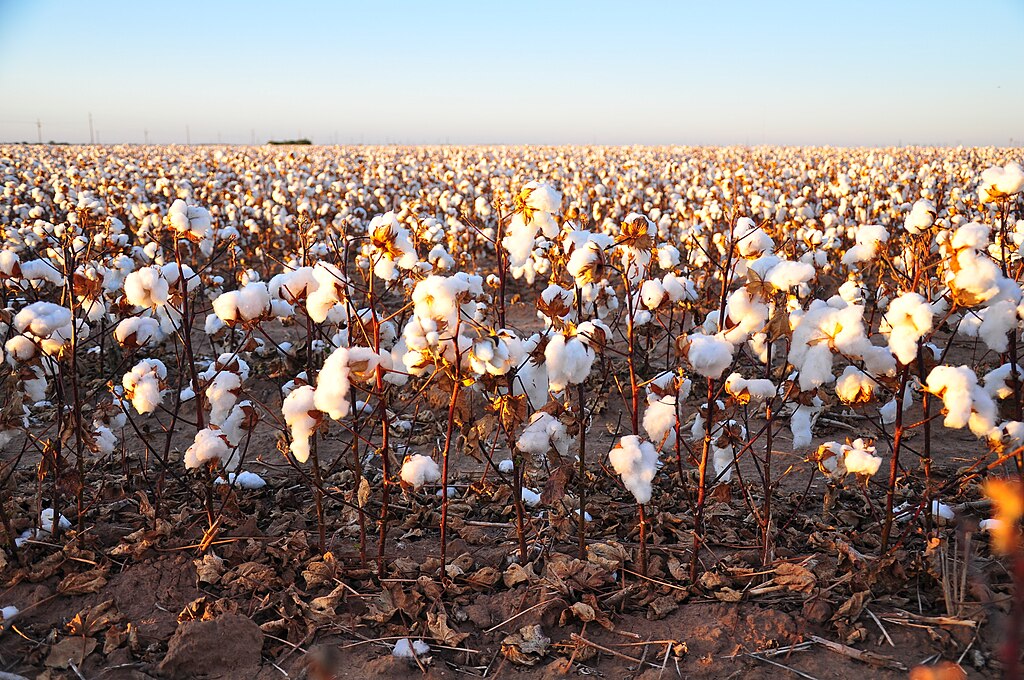
In the photo you see a cotton field. Cotton is the second most common material used in clothing, right after polyester. Biggest cotton production countries are India and China, where cotton is produced often in dry regions where water is scarce, yet large amounts of water are required both for cultivation and textile processing. This leads to the depletion of local water sources, causing wells to dry up and entire rivers and lakes to disappear.
The use of chemicals in fertilisers and pesticides affects the workers in the fields and also the local population as groundwater becomes contaminated. The WHO estimates that 22,000 people die each year due to pesticide use in cotton farming.
Image 3
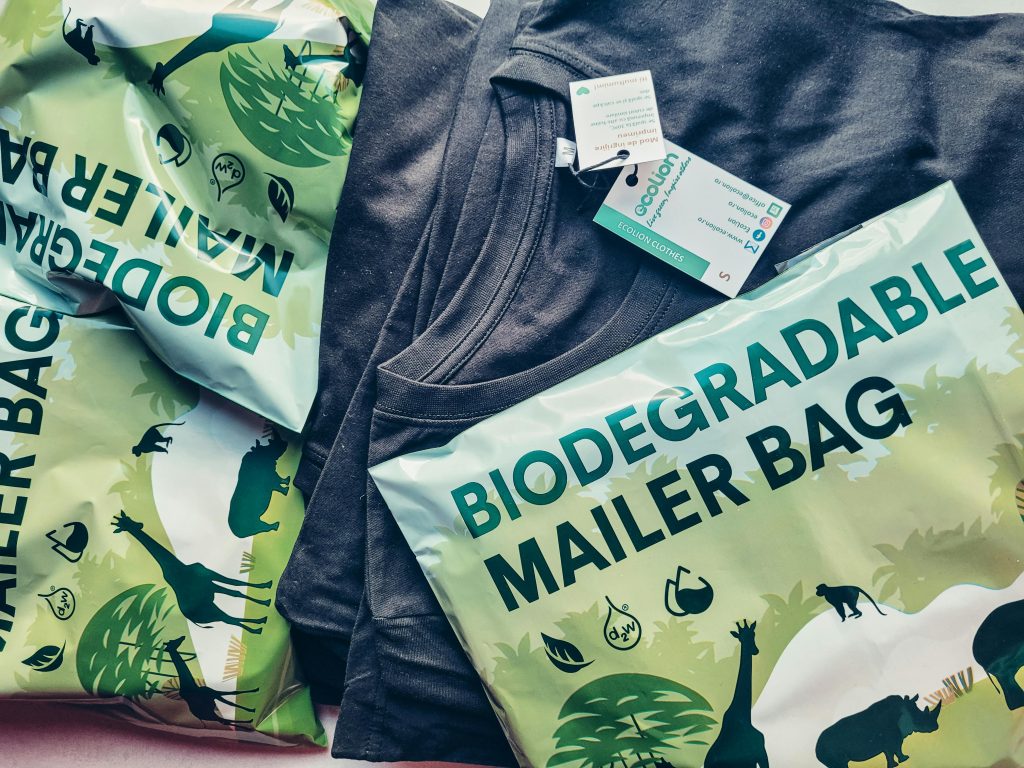
Bought a t-shirt and it came in a biodegradable packaging? Packaging is only a tiny part of the overall environmental impact of a product, and it is the impact of the manufacturing of the shirt itself that requires the most resources. Also, the bag being biodegradable focuses on the end of the material’s life but what do we know about the sustainability of the production? Ambiguous icons and made-up certificates can be added to give a more sustainable appearance but is any information about them given?
(source)
Do you see these kinds of photos in companies’ advertisements and communication? Why?
Does it matter what kind of images are shown in companies’ advertisements or communication? Why?
Is it… greenwashing?
Greenwashing hides in vague words
Greenwashing can be difficult to distinguish. It is often done by exaggerating certain details of the product, production or the company’s operations, omitting some of the truth and using vague terms.
What does produced with respect for nature mean? Or what part of the product or production is carbon neutral? These are nice-sounding phrases, but they don’t really mean much.
You should also be careful with the wording! ”Made from 100 % recycled material” implies that all material in the product is recycled, while ”made with recycled materials” may mean that only a small percentage is recycled.
What about human rights?
Products are often marketed on the basis of their environmental impact. If marketing focuses only on climate and environmental impacts, many other important aspects are overlooked.
Under what conditions were the products manufactured? Who made them, and in which country? Are human rights and workers’ rights taken into consideration? ?
Many consumer products are made in so-called ’risk countries’, where there’s a high risk that worker’s rights like earning a living wage and having safe working conditions are not met. You cannot talk about a responsible product unless responsibility is also taken into account in terms of human rights throughout the production chain.
So, when assessing the sustainability of a cotton T-shirt, there are many things to consider:
1. Vague expressions without justification
Made with respect for the environment! So, how? Greenwashing is often about the use of words and phrases whose meaning is unclear or open to interpretation.
If an advertisement uses general or vague claims such as responsible, green, sustainable or ecological, it is important that the claim is substantiated. Of course, these arguments should also be read with a critical eye.
2. Getting to scale
An attempt may be made to draw consumers’ attention to a small act of responsibility.
Take packaging, for example: a company may advertise that its product is ecological because it is packaged in biodegradable material. However, packaging is only a small part of the overall environmental impact of a product, and it is the impact of the manufacturing of the product itself that matters more.
3. Labels, certificates and stamps
The rule of thumb when assessing the various certificates that communicate responsibility is: a certificate issued by an external, independent body is more credible than a label or certificate developed by the company itself. The criteria for the certificate should be ambitious and publicly available. The implementation of the criteria should be monitored and evaluated by someone other than the company itself. This is how a Fair Trade certificate works, for example.
All certifications should be looked at critically: just because a company says it is certified does not mean that everything is OK. The company should also be open about any production problems, how they are being addressed and the timeframe.
4. Building images with colours and pictures
Blue sky, green lawn, laughing child, happily grazing cow… Wait a minute! This type of imagery is often used to create an image of a product’s naturalness on the one hand and animal welfare on the other.
Typically, the colour green creates images of ecology or environmental friendliness, white and blue refer to cleanliness, while brown packaging material is easily associated with recycled materials and earthiness. However, the images and colours used do not necessarily have anything to do with the environmental friendliness of the product.
5. Transparency and facts in order
Of course, for a claim not to be greenwashing, it must be true. It must not mislead the consumer by being false, inaccurate, vague or ambiguous.
A good environmental or sustainability claim tells you exactly how a product, service or company is less harmful to the environment or more respectful of human rights.
Greenwashing in ads
Take a look at the following made-up advertisements. Try to identify possible places where the advertisement ”paints something green”, or seems misleading or problematic to you. Highlight these places and write why you think they are examples of greenwashing.
REMEMBER: Companies’ greenwashing strategies change
It is important to note that greenwashing keeps changing. There already is legislation trying to tackle greenwashing which is a good thing. This won’t end greenwashing but it will take new forms. The worst forms of greenwashing are reduced, but companies have ways to find loopholes. Also, it doesn’t tackle the core problem of consumption: A “green” product can still be just as useless a purchase, even if the company selling it is not directly guilty of greenwashing.
Source: Eetti
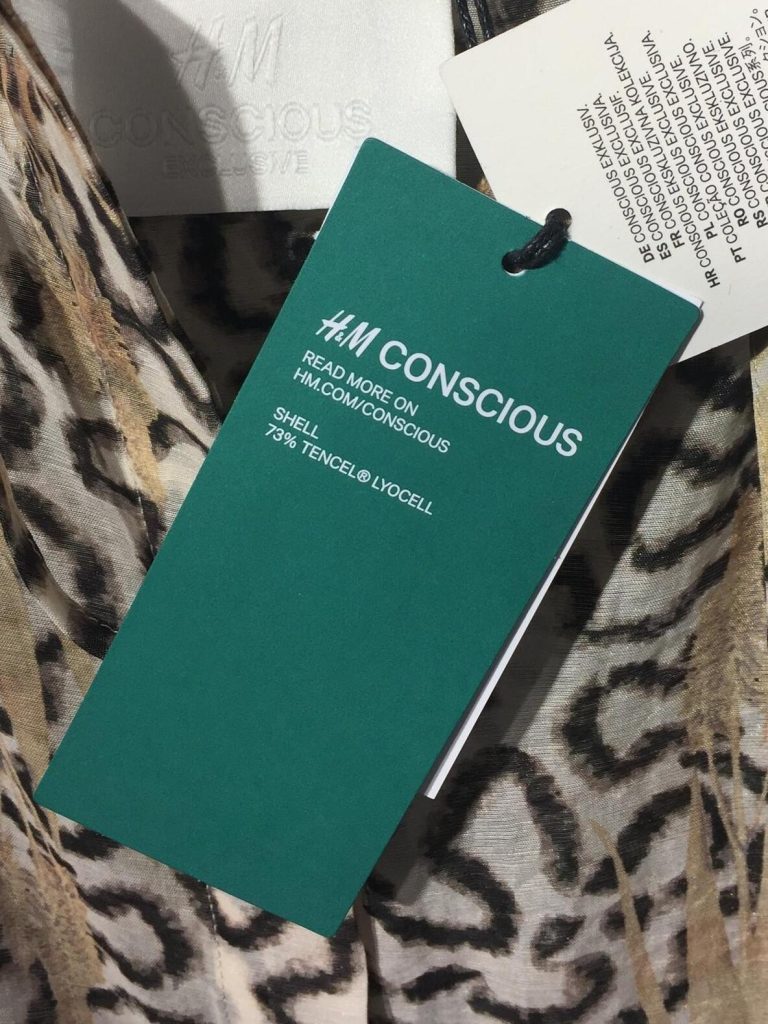
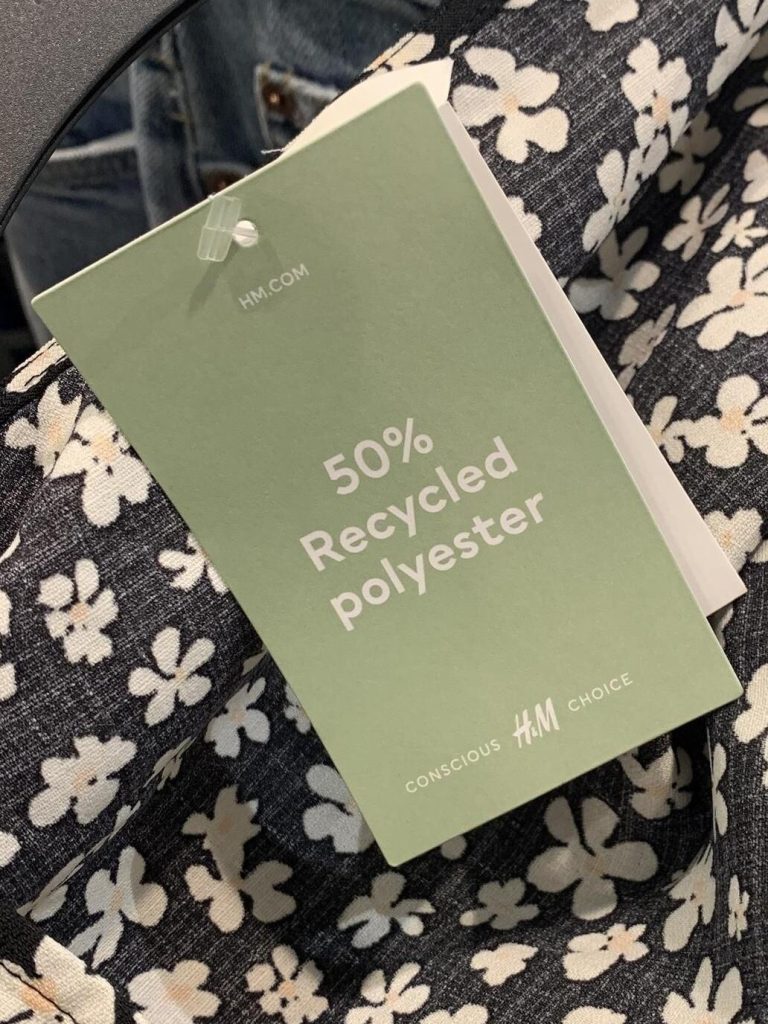
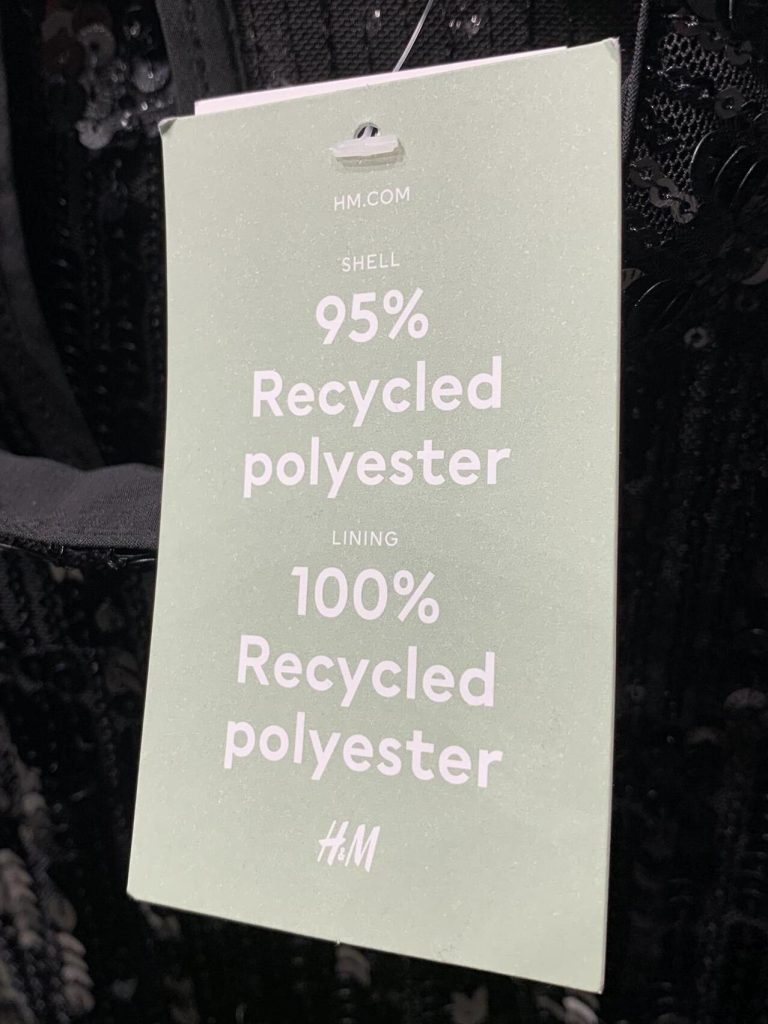
In the images above, you can see how the hang tags in H&M’s Conscious collection have changed over the years.
In 2019, the label read ”Conscious”
In 2023, the label indicated the percentage of recycled material in the garment. The word ”Conscious” was still in small print.
In 2024, the label specified the percentage of recycled material in different parts of the garment. The word ”Conscious” had been removed completely.
The labels convey an image of being organic and making a conscious choice, even though in reality, using recycled material alone is not enough to make a garment environmentally friendly. To our knowledge, H&M no longer sells the Conscious collection.
You’ve reached the end of of the second chapter – great job! Reflect on this:
Was anything surprising – and what will you do with what you’ve learnt?
Part 3: Take action!
You don’t need experience, you just need the will to act. This guide leads you to activities suited to your time, resources, and interests. Let’s promote corporate responsibility and sustainable fashion together!
Try out this quiz below to discover what kind of actions suit you – then find ideas of different actions or alternative ways to consume that doesn’t exploit the planet or its people!
QUIZ: What kind of action suits you?
And now… action!
Now that you know what kind of activism best suits you – here you can find some ideas for what to do. Most of the activities can be done either alone or with others. Note: these categories are flexible and overlapping, and different actions require people with different sets of skills.
Strategic action!
You can for example find on-going campaigns here:
Contact local or national legislators and ask about their stance on the issues, what their ambitions are, and urge them to take more decisive action!
Do you suspect that a company is greenwashing? You can report it!
If a company uses misleading or unclear environmental claims in its marketing, you have the right to report it. This can include advertising, websites, social media posts or product labels. Depending on in which country you are, there may be various ways in which you can report advertisements. We suggest searching for ”report advertising greenwashing” to find relevant channels. If you need help to find out who to contact – you can always reach out to us at info@fairaction.se.
Host an online webinar with eco experts or activists. It does not have to be more difficult than creating an online meeting, contacting someone you have read about who is involved in the topic, and market the event to friends, family and your local community. Contact us at Fair Action (info@fairaction.se) for support and tips on who to contact!
Such as flyers with information on your chosen topic in your hometown, school etc.
Hands-on action!
Repair and improve an old piece of clothing – maybe change it into something completely different? If you don’t know how to there are many instruction videos on Youtube and social media, search for words such as ”how to upcycle *piece of clothing*”. You can also do this together in a group and learn from each other.
The word upcycling means that we reuse a product in a creative way that improves its value compared to before (instead of recycling where the value remains the same as before).
There are many ways to fulfill your needs that do not contribute to overconsumption – by clicking below you can find some inspiration!
- Gather your crew and set the date. Invite friends, classmates, or your community. Pick a fun day and a cozy spot, could be a park, school, or community center.
- Collect and sort clothes. Ask everyone to bring clean, good-condition clothes they no longer want. Sort them by size or style to make swapping easier and fun.
- Swap, style and celebrate! Set up the clothes like a mini shop. Everyone picks what they love, tries on, and swaps stories. End with music, snacks, and good vibes.
Creative action!
Start by following accounts that promote sustainability and share reliable information such as: @fash.rev, @labourbehindthelabel, @cleanclothescampaign, @fairaction. Then move on to sharing and creating your own content. Feel free to tag us as well as companies when trying to get the brands’ attention!
For example ”Buying a maximum of 5 clothes items per year” or ”one month with no purchases”.
Write an article about greenwashing and/or fast fashion in your school’s/community’s publications or a local newspaper.
Direct action!
Go into a store and ask directly about working conditions and emissions!
Write to brands, either by email or on social media, and ask them directly about the wages of their workers, their working conditions, or their impact on the environment – and how they plan to make it all better! Usually you can find their contact info by simply searching for the brand on social media, or searching for ”*name of brand* contact” on any search engine.
Don’t forget to ask follow-up questions in case the response you got wasn’t clear enough!
If you are writing on social media – feel free to tag us in your post (@fairaction).
Take to the streets – organize or join a protest or action. Here you can access a step-by-step guide:
Share your impact!
Whenever you do something – tell others about it! Feel free to tag us on social media – this will help us track your impact and cheer you on!
You can also contact us at info@fairaction.se if you are looking for ways to get involved or sign up for our newsletter by entering your email at the very bottom of this page.
Instructions for youth workers, facilitators and educators
Would you like to use this material to hold a session with youth on the topics of fast fashion and greenwashing? Then you are in the right place. While this online toolkit has been created for individual, online use, there are two main ways in which you can organise a physical session around it:
- Let the youth go through the material by themselves or in pairs and be there to offer help.
- Go through the material together with the youth and do the reflection questions together and/or even try out the action part together.
We also have a workshop about the same themes which requires no digital tools. Here you can find the guide for workshops of varying lengths.
If you end up taking action on these topics, you can share the results with us. If you post on social media, please tag us on your post and we can repost your project.
This toolkit was created as a part of the Erasmus+ project entitled “Walk the green talk – Better methods to engage youth on greenwashing” (2023-2-SE02-KA220-YOU-000178612). The project is co-funded by the European Union. Views and opinions expressed are however those of the creators only and do not necessarily reflect those of the European Union or the Swedish Agency for Youth and Civil Society, MUCF. Neither the European Union nor the granting authority can be held responsible for them.